The Handelot Times
Who does the broker’s market hurt?
The parallel market - sometimes called the “broker’s” market - is a name given to the marketplace providing goods for sale that lies outside official distribution channels and contracts.
The parallel market - sometimes called the “broker’s” market - is a name given to the marketplace providing goods for sale that lies outside official distribution channels and contracts.
In the space of the last hundred years or so just about every field of business has embraced it, from perfume to the auto market, electronics and computer games to securities and even baby formula. Producers constantly ask that distributors only sell their goods to end customers. However, due to high pressure from manufacturers, imposed volumes and suggested retail prices, distributors often resell products to other sellers. Resell is common as it allows distributors to reduce storage costs and free up financial assets for other business operations. Even so, this approach does not appeal to many producers, who want to exert full control over the market and the sale of their products.
Dissatisfied goods manufacturers coined the term “gray market” or “gray zone” in the late 1980s to stoke customer fears that buying products on the parallel market was somehow illegal. On the contrary, there is nothing illegal either in the functioning of the parallel market or in buying products from it. What’s more, the Supreme Court of the United States and the European Court of Justice upheld their position on the legality of resale of products by distributors to other business entities. Further, the ECJ has ruled that parallel trade is legal provided that the producer originally allocates their products to the European market.
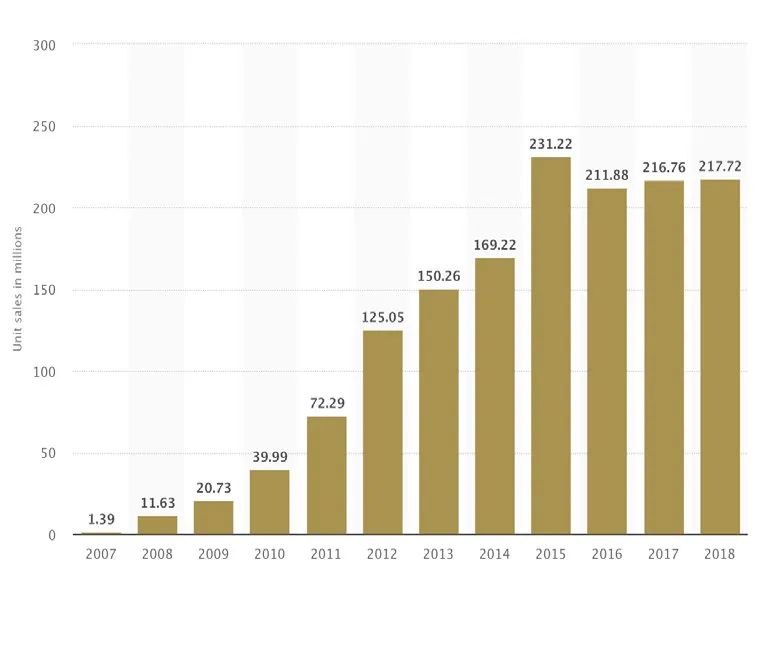
The first generation of Apple’s iPhone was introduced in 2007, bringing innovative features such as a touch screen interface and a virtual keyboard to a broader audience.