 The Handelot Times
Brendan James: takeaways from the east, March 2018
If there’s one thing that you, the loyal Handelot Times reader, have picked up on in our first year of publishing, it’s the fact that we are deeply interested in the Chinese and Indian smartphone markets.
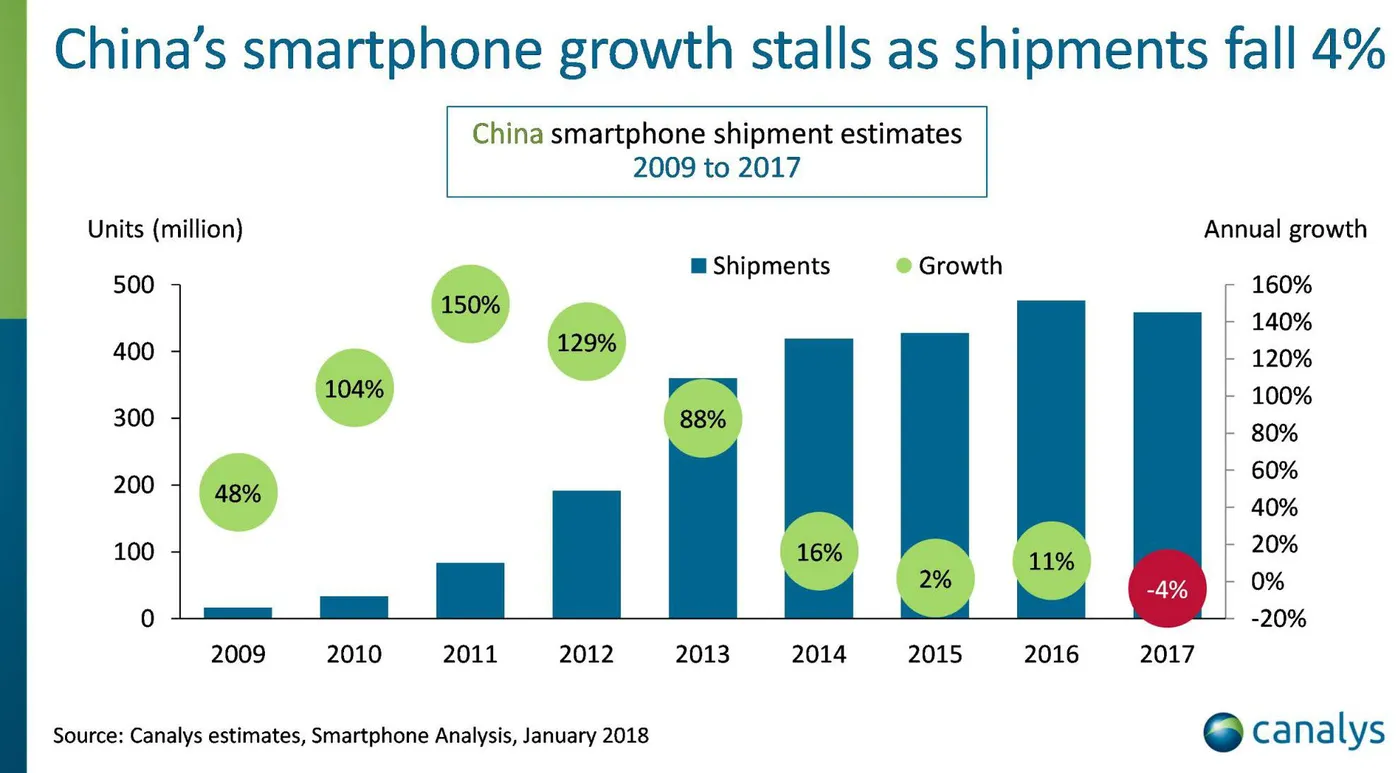
If there’s one thing that you, the loyal Handelot Times reader, have picked up on in our first year of publishing, it’s the fact that we are deeply interested in the Chinese and Indian smartphone markets. They have proven to be dynamic and ever-changing markets, with the emergence of Xiaomi and its propensity for giving smartphone giants headaches, and its unpredictability makes it all the more entertaining to watch. Now, more than ever, it’s a tale of two cities (or in this case, countries) in terms of the smartphone shipping landscape.
Tech analysis firm Canalys report that the Chinese market has reached saturation as the first ever annual decline in shipments was recorded there. After years of growth, shipments fell 4% from Q4 2016 to Q4 2017. Not only have most manufacturers suffered a decline in their shipments but the vendor scene is also stratifying: Larger vendors such as Nova and Honor have gotten a bigger share of the shipments, while smaller ones such as Gionee and Meizu risk getting squeezed out altogether. The only two manufacturers whose fortunes did not swoon over this span were Apple, who reclaimed third place from Xiaomi in shipping, and Huawei, who – being helped by the growth of their vending partner Honor – saw a 9% uptick in their shipping.
The news from Xiaomi may seem disheartening to fans of the young juggernaut (and those wishing on the demise of the Apple empire). However, it’s not all bad: Forbes has issued a report revealing that Xiaomi has achieved RMB 100 million in revenue in eight years of existence – a feat that took Apple twenty years to accomplish. Now, China and India share a long border, and it is evident that fortunes in the shipping game are as different as night and day on either side. Where Xiaomi’s growth may be stagnating in their home market, it is absolutely soaring in India, their biggest foreign market.
Forbes also reports that they have overtaken Samsung to become the best-selling smartphone manufacturer in the country. This shift is owed to two things: the fact that Samsung has been caught repackaging older models and selling them as new, and Xiaomi’s aggressive expansion plan that has included opening large-format retail stores, pop-up shops at established electronics retailers, and a deep-dive into mass advertising like they’ve never attempted before. Most of all, India’s market is not on the verge of saturation. In fact, sales of smartphones are expected to double by the year 2020.
More in Phones
 Phones
The AI tax on your next phone: how memory costs are reshaping smartphone pricing
 Phones
The satellite phone isn’t coming: it’s already in your pocket, so why doesn’t it feel that way?
 Phones
Two autumns a year: inside Apple’s break with the September ritual
 Phones
The flagship killer is dead: inside OnePlus’s retreat and what’s left of it