 The Handelot Times
More future, more problems: is 5G hazardous to health?
As mobile devices from phones to tablets to handheld gaming consoles are omnipresent nowadays, so too are the microwave signals that give them their connectivity.
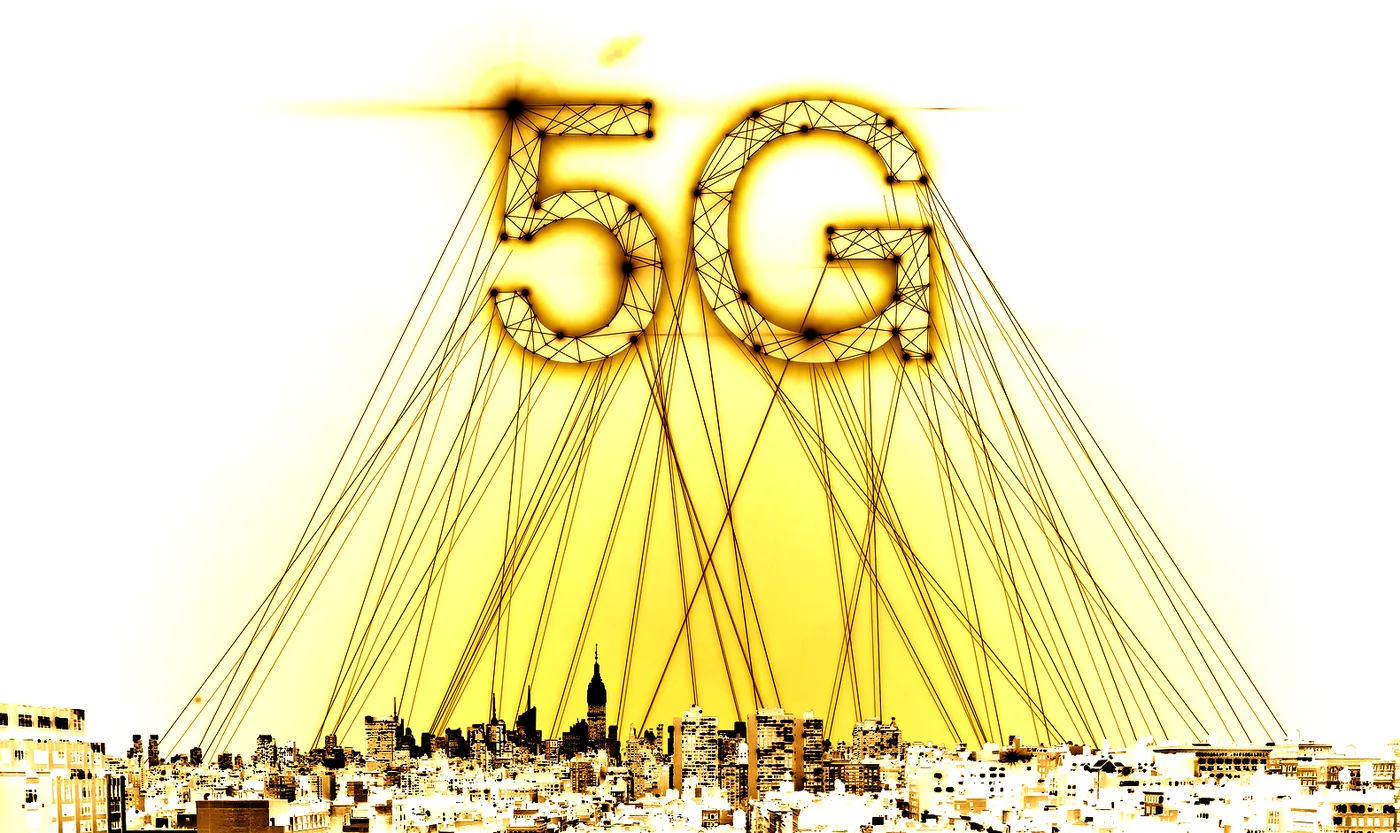
As mobile devices from phones to tablets to handheld gaming consoles are omnipresent nowadays, so too are the microwave signals that give them their connectivity. They are invisible, and an innumerable amount of them pass through our bodies daily. It’s somewhat alarming if you think about it. What effect could that possibly have on us? A prime difference between 4G, 5G, and all the other Gs is wave frequency, and 5G is the highest wave frequency we’ve seen yet. This might be overstating the obvious, but radio waves emitted at high frequencies are what make things like Roentgen rays (or X-rays if you’re so inclined) function. In short, too much all at once will kill you. This is not to say that 5G is at the level of Roentgen just yet, but it does make one wonder what could be going on.
Well, what could be going on?
Let’s go back to basics. Let’s go back to before 4G, before 3G, back to 2G, which was the wireless standard that laid the groundwork for digital wireless communication as we know it today. 2G, the first networks of which were launched in 1991, provided for digital encryption of communication and provided for SMS messaging capabilities. Most of all, it was the first standard that operated on wavelengths frequent enough to raise questions as to their effects on people.
Frequency of usage became just as pertinent; as more and more people subscribed to mobile phone services, more and more calls were made and texts were sent. As a result, these invisible wireless signals, which are essentially low-level forms of radiation, were everywhere. We were being exposed to radio frequency radiation (RFR) without any idea what implications that could hold.
Naturally, scientists come to the rescue to shed light on the situation. A team of researchers decided to test the hypothesis that wireless signals have a detrimental on living things by exposing groups of chicken embryos to RFR emitted from 2G and 3G signals. The findings, which were published in the Journal of Clinical and Diagnostic Research, revealed that RFR caused “structural changes in [developing chick] livers in the form of dilated sinusoidal spaces with haemorrhage, increased vacuolations in cytoplasm, increased nuclear diameter and karyorrhexis and significantly increased DNA damage,” with the changes being more pronounced in the group exposed to 3G than 2G. If you don’t understand medicalese, the bottom line is this: cellular phone signals have serious effects on the very structures of cells, having an influence on the development of tissues and organs.
More in Phones
 Phones
The AI tax on your next phone: how memory costs are reshaping smartphone pricing
 Phones
The satellite phone isn’t coming: it’s already in your pocket, so why doesn’t it feel that way?
 Phones
Two autumns a year: inside Apple’s break with the September ritual
 Phones
The flagship killer is dead: inside OnePlus’s retreat and what’s left of it