 The Handelot Times
Quick hits: TikTok saved, sort of, and SpaceX swallows xAI in the largest merger in history
TikTok saved, sort of: the US spinoff that satisfied nobody
The saga that consumed Washington for nearly two years reached its conclusion on January 22, 2026, when TikTok’s US operations were formally divested into a new entity called TikTok USDS. The deal, structured as a joint venture, gave American investors majority control: Oracle and Silver Lake each took 15 percent, alongside MGX, a UAE-based investment firm, which also acquired 15 percent. ByteDance retained a 19.9 percent stake, with the remainder distributed among ByteDance-affiliated investors. The arrangement technically satisfied the law requiring ByteDance to divest its US operations or face
SpaceX swallows xAI in the largest merger in history
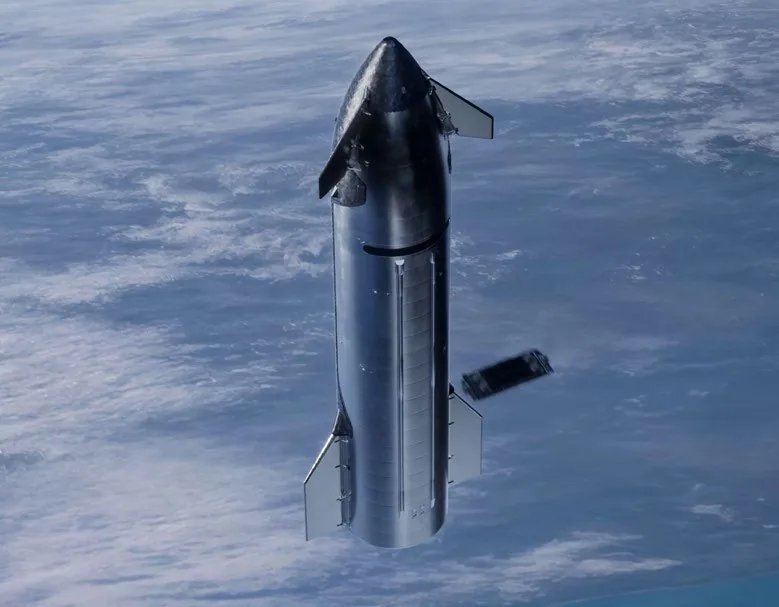
Elon Musk consolidated two of his most ambitious ventures in February 2026 when SpaceX formally acquired xAI, the artificial intelligence company he had founded in 2023. The combined entity was valued at $1.25 trillion, making it the largest merger in corporate history: SpaceX accounted for $1 trillion of the valuation, xAI for $250 billion. Musk’s stated rationale centered on a concept that sounded like science fiction but carried serious financial backing: orbital data centers. In a memo posted a ban, but it immediately drew scrutiny over whether it actually addressed the national security concerns that had prompted the legislation in the first place. Senator Ed Markey publicly questioned whether Americans had sufficient information about the deal’s structure, noting that ByteDance’s global entity would continue to manage e-commerce, advertising, and marketing on the US platform, and that the new venture would license TikTok’s algorithm from ByteDance before retraining and reviewing it. For advertisers and B2B marketing teams that had built substantial audience strategies around TikTok’s 170 million US users, the deal provided operational continuity but left long-term uncertainty unresolved. The platform remained available, the algorithm remained largely intact, and the political questions remained open. to SpaceX’s website, Musk argued that the lowest-cost approach to generating AI compute would be in space within two to three years, leveraging SpaceX’s Starlink satellite infrastructure and launch capabilities to position computing hardware in orbit. The deal also functioned as strategic positioning ahead of a potential SpaceX IPO later in the year, with reporting indicating a target valuation as high as $1.5 trillion. For the AI infrastructure market, the merger raised a fundamental question: if AI compute moved to orbit, what happened to the terrestrial data center buildout that was absorbing hundreds of billions in capital expenditure? The scenario remained speculative, but the money behind it was not.
Europe sharpens its teeth: DMA fines land, AI Act enforcement approaches
The European Union escalated its regulatory offensive against Big Tech in the first half of 2026, delivering fines that demonstrated the Digital Markets Act was not merely symbolic. Apple was fined €500 million and Meta €200 million for non-compliance with DMA provisions, penalties that represented the first major enforcement actions under the regulation. Google, already found guilty of holding a monopoly in both search and advertising technology in separate US proceedings, faced a €2.95 billion EU antitrust fine for distorting com-
The semiconductor comeback: Intel and AMD rewrite their narratives
While NVIDIA dominated the AI infrastructure conversation, the first half of 2026 produced a dramatic turnaround story for its two oldest rivals. Intel’s stock surged 453 percent over twelve months, driven by a foundry business that attracted external customers and renewed relevance in AI inference workloads. Intel’s Q1 2026 revenue rose 7 percent year-on-year to $13.6 billion, with data center and AI revenue climbing 22 percent. The validation moment arrived when Intel’s Xeon 6 processors were selected as the host CPU for NVIDIA’s own DGX Rubin NVL8
More in Markets
 Markets
Salt instead of scarcity: how CATL’s sodium battery launch redraws the map of the energy transition
 Markets
Big Tech’s power shift: who owns AI, who owns the future
 Markets
The $3 trillion IPO summer: SpaceX, OpenAI and Anthropic go public
 Markets
Cloud reloaded: how the IPO wave is reshaping infrastructure