 The Handelot Times
The $3 trillion IPO summer: SpaceX, OpenAI and Anthropic go public
On June 12, SpaceX began trading on the Nasdaq under the ticker SPCX. The listing raised $75 billion at a valuation of $1.75 trillion, making it the largest initial public offering in financial history.

To put that number in perspective: $3.7 trillion is roughly the GDP of Germany. It is more than the combined market capitalization of every company listed on the London Stock Exchange. We are not talking about a busy quarter for bankers. We are talking about a structural shift in how the most consequential technology companies of the decade choose to finance their next chapter.
The timing was not accidental. After two years of suppressed IPO activity, falling interest rates and stabilizing macroeconomic conditions reopened the window. But the deeper driver is simpler: private capital hit its ceiling. Even the largest venture funds on Earth cannot indefinitely bankroll companies that burn billions per quarter on GPU clusters, satellite constellations, and research teams that cost more than small nations spend on their entire technology budgets. The road to public markets was never a question of if. It was a question of when.
For B2B decision-makers, investors, and technology professionals, this IPO wave carries implications that go well beyond stock tickers. It will reshape cloud infrastructure spending, redefine competitive dynamics in artificial intelligence, and force a reckoning with how we value companies that promise to change the world but have yet to turn a consistent profit. In this article, we examine what each company brings to public markets, what the numbers actually say, and what the risks look like from the inside.
SpaceX: the $1.75 trillion colossus
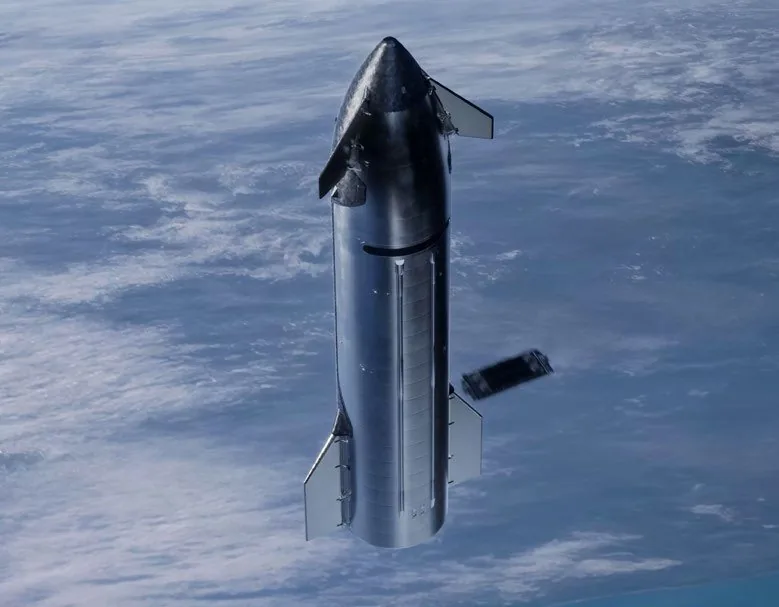
SpaceX’s S-1 filing, submitted in May, confirmed what the private market had long suspected: Starlink is the company’s profit engine, and everything else is an expensive bet on the future. In Q1 2026, Starlink generated $3.26 billion in revenue with an operating margin of 63 percent, a figure that would make most SaaS companies envious. The satellite internet service now serves over 12 million active users across more than 100 countries. For the full year 2025, Starlink accounted for 61 percent of SpaceX’s total sales, pulling in $11.39 billion. The rest of SpaceX’s portfolio tells a very different story. The rocket launch division, despite its cultural cachet and its role as the backbone of NASA’s crewed missions, lost $657 million in 2025. And then there is xAI, Elon Musk’s artificial intelligence venture, which SpaceX absorbed in February 2026. The AI division posted an operating loss of $6.35 billion in 2025, followed by another $2.47 billion in Q1 2026 alone. After consolidating xAI’s losses, SpaceX swung from a net profit of $791 million in 2025 to a net loss of $4.94 billion in early 2026.
More in Markets
 Markets
Salt instead of scarcity: how CATL’s sodium battery launch redraws the map of the energy transition
 Markets
Quick hits: TikTok saved, sort of, and SpaceX swallows xAI in the largest merger in history
 Markets
Big Tech’s power shift: who owns AI, who owns the future
 Markets
Cloud reloaded: how the IPO wave is reshaping infrastructure