 The Handelot Times
Salt instead of scarcity: how CATL’s sodium battery launch redraws the map of the energy transition
CATL’s TENER Sodium system moves sodium-ion storage from laboratory promise to signed contracts.
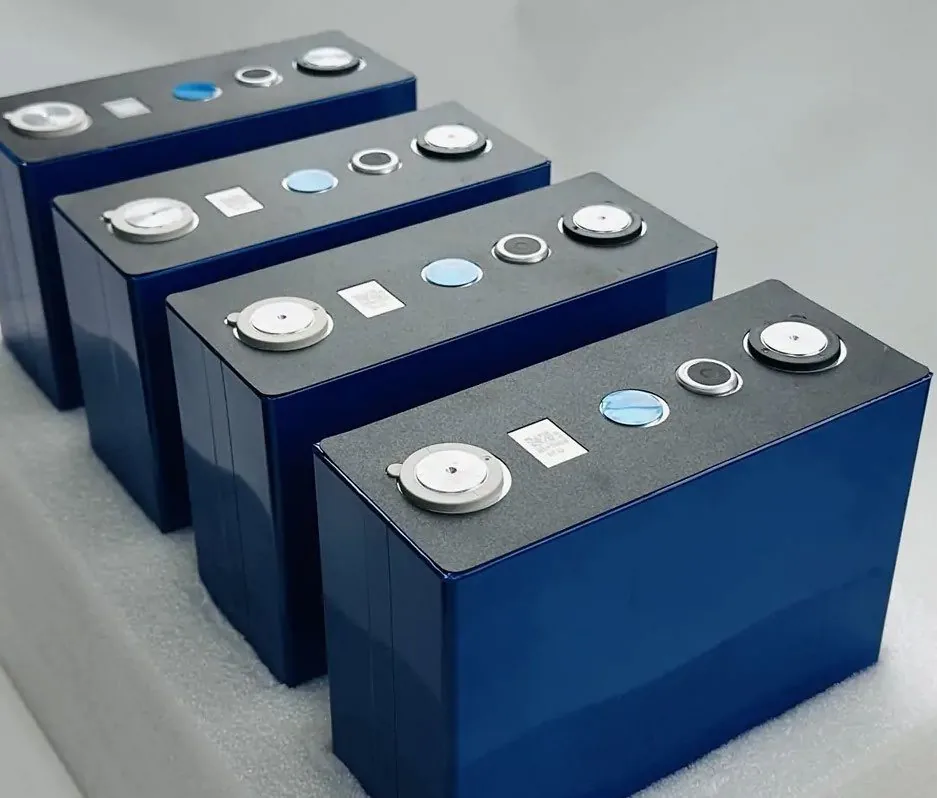
On June 22, 2026, in Munich, CATL unveiled the TENER Sodium Energy Storage System and made a claim that sounded modest and was not: that sodium-ion grid storage had reached full commercial maturity across technology, manufacturing capacity, and supply chain. The product itself is a large steel box. The consequence is a structural change in who holds leverage over the world’s electricity infrastructure.
For a decade, the energy transition has carried an uncomfortable dependency. Every solar farm that needs to store daytime output, every wind installation that must smooth its intermittency, every data center hedging against grid instability — all of it has been anchored to lithium. And lithium comes from very few places. If sodium-ion storage genuinely works at scale, that anchor loosens. This is the first serious evidence that it might.
What CATL actually announced
The specifications are worth stating precisely, because the gap between a demonstration unit and a shippable product is where most battery announcements die. The system. TENER Sodium delivers more than 30 MWh of rated capacity on a fully modular architecture. Each module weighs roughly 42 tonnes, and a 1 GWh site requires only 34 of them. Energy and power blocks are decoupled, supporting storage durations of 1, 2, 4, 6, and 8 hours depending on project need. Faulty modules can be isolated and swapped independently rather than taking a station offline.
The longevity claim. CATL states the system achieves 15,000 cycles at 25°C, translating to a 25–30 year service life measured against a 70% state-of-health threshold. If that holds in the field, it is a genuinely long asset life for grid storage — comfortably beyond typical LFP warranties.
More in Markets
 Markets
Quick hits: TikTok saved, sort of, and SpaceX swallows xAI in the largest merger in history
 Markets
Big Tech’s power shift: who owns AI, who owns the future
 Markets
The $3 trillion IPO summer: SpaceX, OpenAI and Anthropic go public
 Markets
Cloud reloaded: how the IPO wave is reshaping infrastructure