 The Handelot Times
2023-24 outrageous predictions: the war economy
Russia’s government has unveiled its proposed budget for 2024, marking a historic shift in the nation’s priorities.
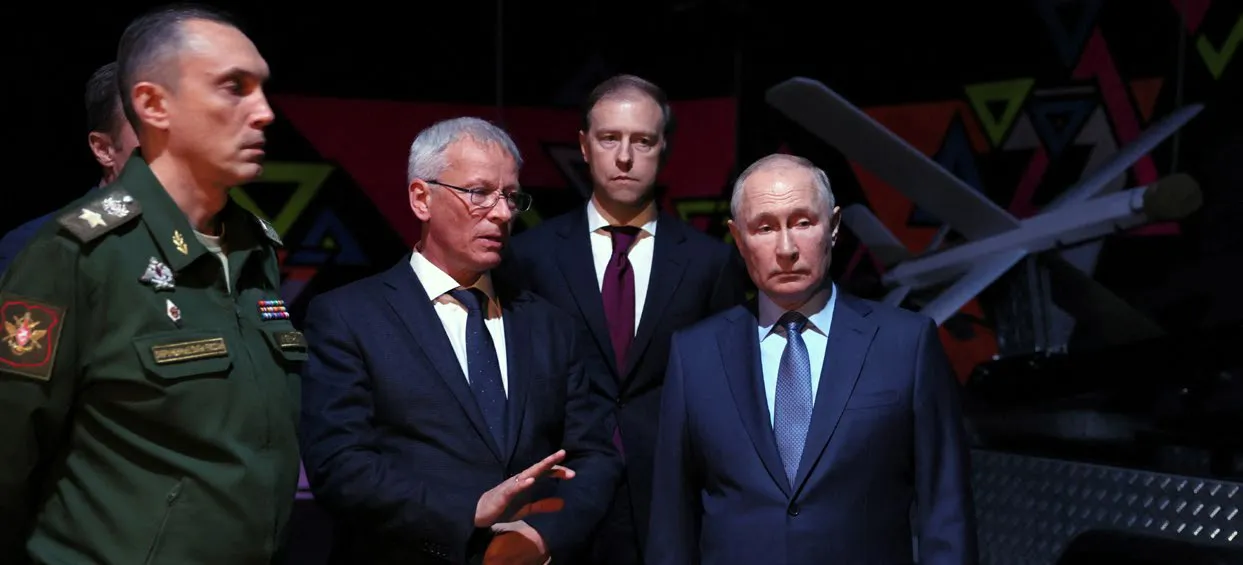
Russia’s government has unveiled its proposed budget for 2024, marking a historic shift in the nation’s priorities. For the first time in modern history, Russia intends to allocate a substantial 6 percent of its gross domestic product (GDP) to military expenditure. This bold move will result in defense spending surpassing social spending. It signals a significant transformation, with the war against Ukraine and the West not only dominating the Kremlin’s agenda but also serving as a primary driver of Russia’s economic growth.
The record-high defense spending clearly indicates that the Kremlin has no immediate intentions of concluding its conflict with Ukraine; instead, it is preparing for a sustained, long-term effort. Even if the intensity of fighting decreases or a ceasefire is achieved, the allocated funds will be directed toward replenishing Russia’s depleted military assets. These resources provide the flexibility to support various scenarios, including the imposition of martial law or full-scale mobilization.
The proposed budget, currently pending approval by the State Duma, forecasts a revenue increase of over one-third in 2024, amounting to 35 trillion rubles ($349 billion). Approximately 11.5 trillion rubles is expected to stem from the oil and gas sector. Planned expenditures for 2024 are estimated at 36.6 trillion rubles, a substantial 26.2 percent surge compared to the preceding year. As a result, the government aims to significantly reduce the budget deficit next year, from 2 percent of GDP in 2023 to a projected 0.8 percent of GDP in 2024.
The 2024 budget anticipates an increase in social spending, allocating approximately 1 trillion rubles, reaching 7.5 trillion rubles. In contrast, expenditures on national security, encompassing agencies like the National Guard internal military force and the Federal Penitentiary Service, will rise from 3.2 trillion rubles to 3.5 trillion rubles. However, spending on education and healthcare is expected to remain at the 2023 level, resulting in a real-term reduction in 2024. Despite these spending commitments, the Economic Development Ministry anticipates only a moderate increase in inflation, approximately 4.5 percent in 2024.
More in Markets
 Markets
Salt instead of scarcity: how CATL’s sodium battery launch redraws the map of the energy transition
 Markets
Quick hits: TikTok saved, sort of, and SpaceX swallows xAI in the largest merger in history
 Markets
Big Tech’s power shift: who owns AI, who owns the future
 Markets
The $3 trillion IPO summer: SpaceX, OpenAI and Anthropic go public