 The Handelot Times
A year of war: what has changed in Ukraine and in the world
The opening speech of the conflict, given by Putin on February 21, 2022, had given a glimpse of some decisive elements of the war that would open in a few days.
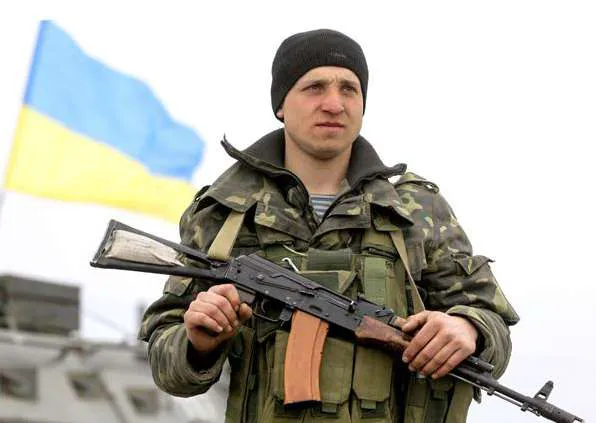
The opening speech of the conflict, given by Putin on February 21, 2022, had given a glimpse of some decisive elements of the war that would open in a few days. On that occasion, the head of the Kremlin had reiterated some concepts that represented the backbone of Moscow’s propaganda communication in the first months of the war: the need to defend one’s fellow citizens of the Donbass; Ukrainian as an ‘inalienable part of our own history, culture and spiritual space’; nationalism as a virus; the need to ‘denazify’ Kiev and bring Ukraine closer to Russia’s own values; the continuous reference to a sense of common identity, or of community, reaffirmed on several occasions, relying on belonging to the Orthodox confession and on the strong cultural roots of Russkij Mir.
If in that speech all the eyes of Russian power were focused on Ukrainian territory, and on the attempt - which appears increasingly evident from a distance - of a ‘regime change’ in Kiev while the claimed territories of Donbass were being acquired militarily, to date, considering the evolution of war events, things are changing and, with them, Putin’s strategic and communicative focus is extending to a conflict that increasingly appears civilized and not just territorialized.
In the early days of the conflict, all the signs brought the observers’ attention back to previous events, in which Russia had been the protagonist of military incursions that had guaranteed her success in the space of a few days: not only the Crimea a few years earlier, in 2014, with the relative annexation sealed by the disputed, albeit plebiscitary (with 95.3%), referendum of March 16, which had triggered the long wave of European sanctions and the slow Eurasian detachment, but also the Georgian precedent with the war of 2008 which lasted in total just over ten days and which had sanctioned the independence of the autonomous republics of South Ossetia and Abkhazia.
To date, on the one hand, tactical-strategic errors of the Kremlin as well as the response of the Ukrainian resistance, openly funded by NATO forces and supporting countries, have bent the conflict towards global dynamics, which make the current war not only hybrid - with a impressive propaganda mechanism on both sides, fueled by web and social network technologies and systems – but also the mirror of an increasingly clear detachment of the decision-making apparatus from popular sentiment. The recent regional elections, which saw a very limited participation in the polling stations, seem to be only the stamp that certifies the separation between a parliamentary political class which - beyond any facade declarations - is compactly aligned with NATO decisions and a population which , according to polls, is for the majority against the shipment of arms.
More in Markets
 Markets
Salt instead of scarcity: how CATL’s sodium battery launch redraws the map of the energy transition
 Markets
Quick hits: TikTok saved, sort of, and SpaceX swallows xAI in the largest merger in history
 Markets
Big Tech’s power shift: who owns AI, who owns the future
 Markets
The $3 trillion IPO summer: SpaceX, OpenAI and Anthropic go public