 The Handelot Times
Between Smartworking and Workaholism: syndrome: what are the most recurrent symptoms?
Before the Coronavirus emergency, there were lesser workers from home… and now we can see a completely changed scenario with the pandemic.
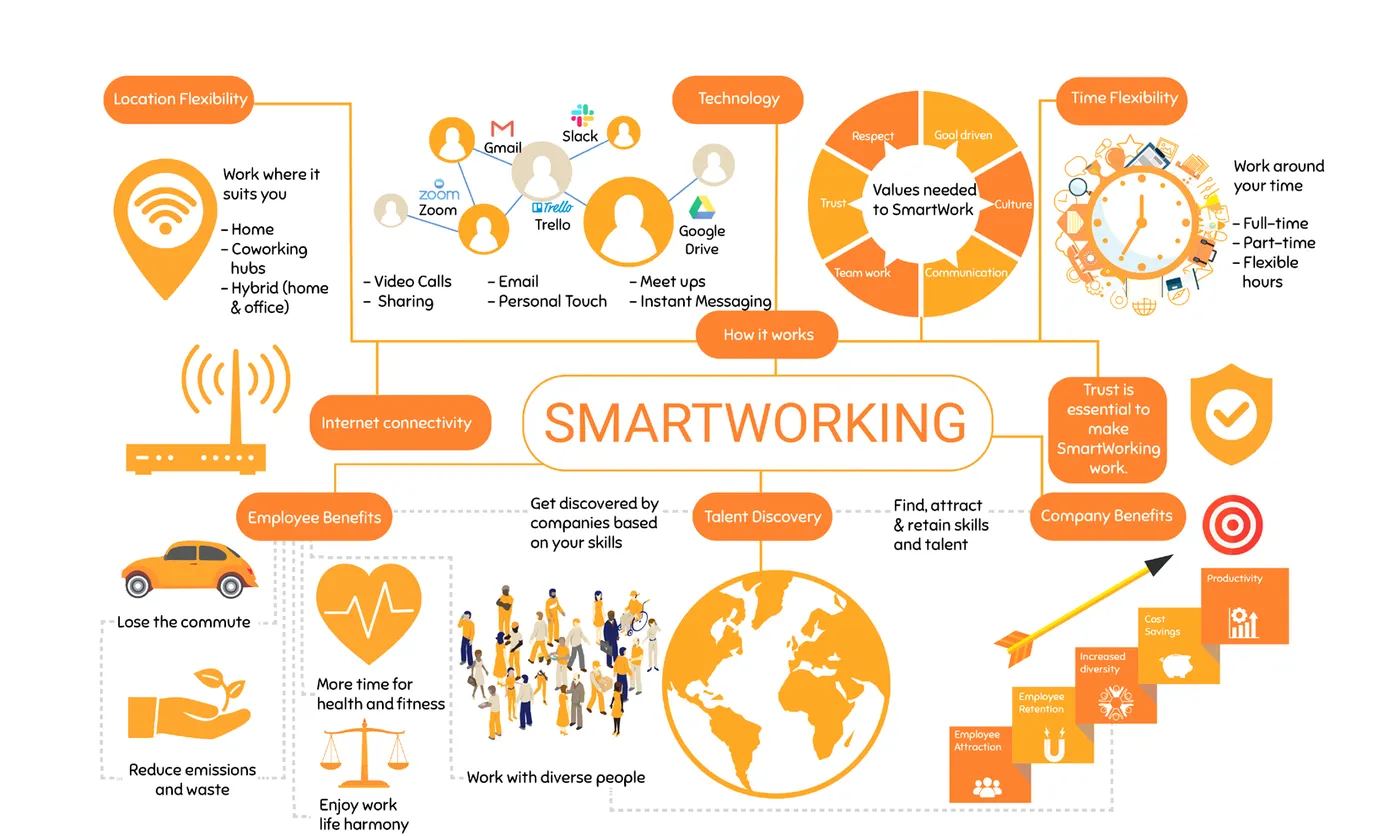
Before the Coronavirus emergency, there were lesser workers from home… and now we can see a completely changed scenario with the pandemic. For example, about 570 thousand people working from home in Italy, corresponding to 2% of employees, compared to 20.2% in the United Kingdom,
16.6% in France and 8.6% in the Germany.
It was an unprecedented situation, which ‘forced’ most of the workers to readjust their lifestyle and work, sometimes with positive implications. In fact, working from home has resulted in a number of advantages for both the company and the employees, concretely translated into fewer days of absence, lower costs, greater compliance with deadlines and greater efficiency at work. Other consequences, no less important, concerned the possibility for workers to spend more time with their families, eat healthier and exercise. Situation that, at least apparently, seems to underline a better level of general satisfaction.
However, to have a clear and comprehensive picture of the situation, it is also necessary to analyze the other side of the coin. In fact, some recent research has highlighted how the lockdown period that forced us to leave our usual workstation was not all plain sailing.
More in Markets
 Markets
Salt instead of scarcity: how CATL’s sodium battery launch redraws the map of the energy transition
 Markets
Quick hits: TikTok saved, sort of, and SpaceX swallows xAI in the largest merger in history
 Markets
Big Tech’s power shift: who owns AI, who owns the future
 Markets
The $3 trillion IPO summer: SpaceX, OpenAI and Anthropic go public