 The Handelot Times
Blockchain: a primer
If the very mention of the term gives you a headache, this is the article for you.
If the very mention of the term gives you a headache, this is the article for you.
In going about daily business, in giving something to one so that we may receive something from another, we often encounter so-called middlemen. These middlemen, when they act as intended, ensure that transactions of all stripes process smoothly, and that all involved follow the previously established rules of conducting such transactions as they were intended. However, as time has gone on and as technology has empowered us to start our own initiatives and take chances to gain ever more as they come. Risk-taking has replaced risk aversion in business, and the spoke-and-hub mechanics that govern the field must change accordingly. Enter the blockchain, a technology that is primed to replace the old spoke-and-hub order of everyday transactions.
Blockchain is all about democratizing access. Chances are if you’ve heard the term before, it has been in conjunction with Bitcoin, a so-called cryptocurrency. In the late 2000s, Bitcoin was thought up by Satoshi Nakamoto, a shadowy figure that to this day people know relatively little about. Mystery notwithstanding, blockchain was is the engine of this unique project, which now has a global circulation worth billions of US dollars. What was a laughable pursuit five years ago has become a serious investment now. But it’s about so much more than currency. We are beginning to discover that blockchain technology has a groundswell of potential for development that could change all manner of transactions forever.
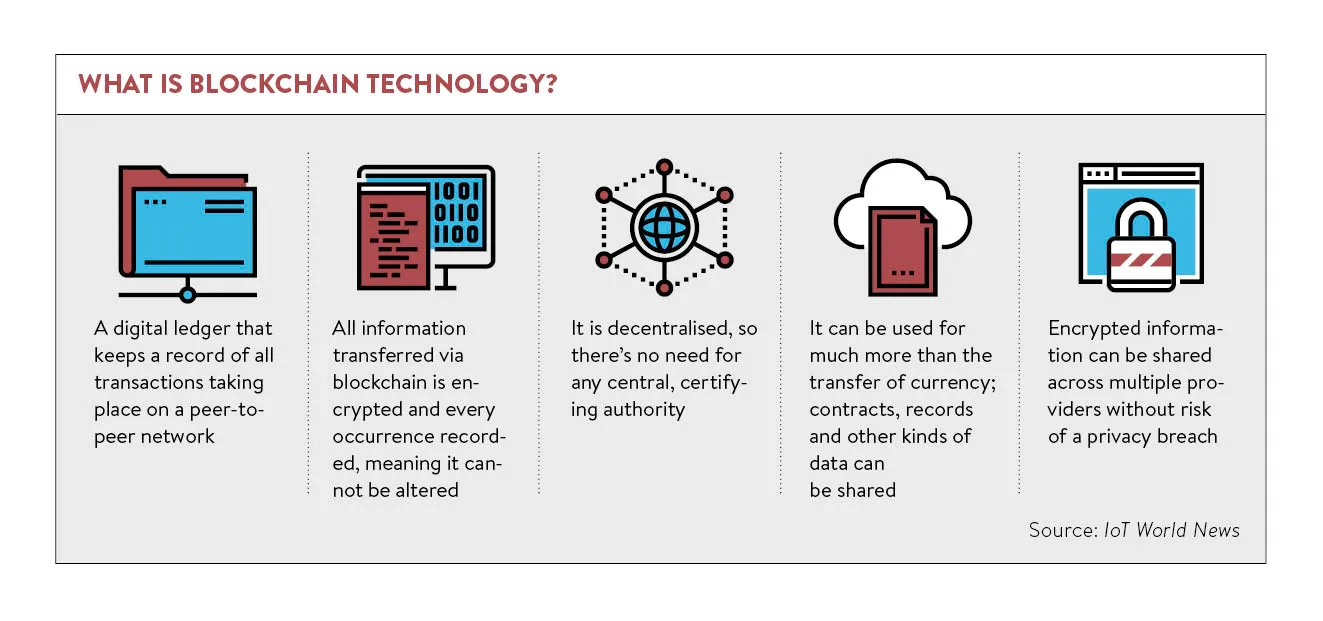
Rather than centrally validating transactions, blockchain – called such because every “block” or user is linked – is predicated upon every user having the same permissions and rights with regard to access to information across the board. Instead of one official ledger, every user in a blockchain has a ledger which is updated with the most recent changes simultaneously. Its very mechanism is fraud-averse; records are managed via peer-to-peer networks and collaboratively authenticated and times-tamped. Additionally, no data can be retroactively altered without the consent of everyone in the blockchain.
More in Markets
 Markets
Salt instead of scarcity: how CATL’s sodium battery launch redraws the map of the energy transition
 Markets
Quick hits: TikTok saved, sort of, and SpaceX swallows xAI in the largest merger in history
 Markets
Big Tech’s power shift: who owns AI, who owns the future
 Markets
The $3 trillion IPO summer: SpaceX, OpenAI and Anthropic go public