 The Handelot Times
Dyson electric cars
The story of the Dyson company, known for its sleek designs that have raised home appliances to the level of art objects, is as inspiring as it is satisfying.
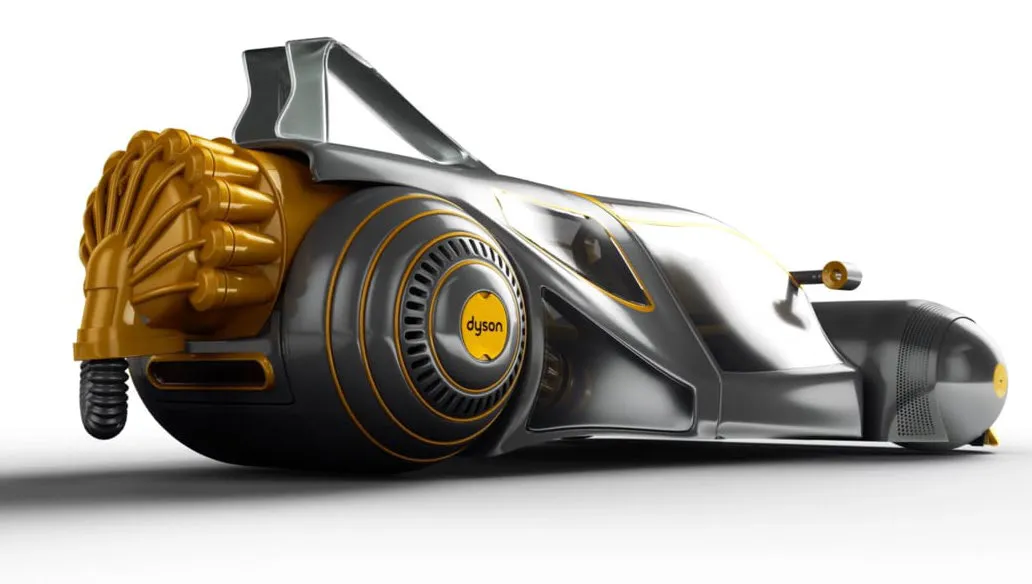
The story of the Dyson company, known for its sleek designs that have raised home appliances to the level of art objects, is as inspiring as it is satisfying. Ballbarrow maker James Dyson, being unsatisfied with the function his home vacuum cleaner, took his know-how and re-engineered the appliance to feature a cyclonic airflow system that lets it run without the need for dust bags, and further reinvented their capability by placing a sphere at the center of its mobility. Fired by his company, Dyson went into business for himself and cranked out thousands of unique, award-winning, and profitable vacuum designs that have often been imitated by competitors who saw his revolutionary design as a threat, but never quite duplicated. The products have a reputation for being as stylish as they are functional; from vacuum cleaners to ventilation fans to space heaters, owning a Dyson cleaner is a signifier of status and taste. Chances are you have had Dyson products in your stockrooms and warehouses at some point in time, and chances are they didn’t stay there long.
James Dyson and Elon Musk are of a piece, the latter constantly pushing the boundaries of what can be achieved by human ingenuity (and almost single-handedly keeping the United States of America in the modern-day space race). Most of all, he is perhaps best known for the electric vehicles bearing his name. Having become status symbols in their own right, their designs have wooed environmentally conscious consumers with an eye for design.
James Dyson has taken notice and turned his attention to conquering and redefining if he has his way - the electric car market. This past fall, the company announced plans to build an automobile manufacturing plant in Singapore to be completed in 2020, with the first Dyson-branded car rolling off the assembly line in 2021. Furthermore, the cars will be tested at the company’s facilities at Hullavington in the United Kingdom. Most interesting is that Dyson is not just doubling down on their gambit, but tripling down. They intend to manufacture three different types of vehicle at the outset, with a sport-utility vehicle and a high-end luxury model rumored to be among the variations. The full total of investments is a staggering $2.8 billion.
A look back at Dyson’s moves reveal that the company has been gearing up to take on an electric car challenge for years. They have worked with American startup Sakti3 in recent years to investigate the viability of solid state batteries, and have shown a willingness to build and expand facilities for the process of experimenting at will. The company’s process of birthing new concepts mirrors the likeness of its founder - all parts for their machines are made in house, which have historically been high in quality. It has been a slow and methodical build to this moment. Whether Dyson can compete with the likes of Tesla is anybody’s guess, but the initial results promise to give the automotive industry something it can sweat over as well as ideas they can borrow from. In the end, we all win.
More in Markets
 Markets
Salt instead of scarcity: how CATL’s sodium battery launch redraws the map of the energy transition
 Markets
Quick hits: TikTok saved, sort of, and SpaceX swallows xAI in the largest merger in history
 Markets
Big Tech’s power shift: who owns AI, who owns the future
 Markets
The $3 trillion IPO summer: SpaceX, OpenAI and Anthropic go public