 The Handelot Times
How does Europe change with the Qatargate challenge
with the Qatargate challenge?
The scandal that has involved some members of the European institutions could prove extremely damaging to the credibility of the European project itself, just after the EU had given a good proof of itself. Let’s see why.
With the Qatargate scandal, the European Parliament is going through the most difficult period in its history: we are facing a corruption scandal that could seriously jeopardize the authority of the institution, if not the entire European Union. To prevent this snowball from getting bigger by continuing to roll, the European institutions must proceed by profoundly innovating their systems to combat corruption and avoid any form of conflict of interest. In the absence of significant reforms in this sense, the ranks of those who want a weak Union, subservient to the States, whose governments tend to look at the EU leadership with hostility, will still swell.
It is still not clear how far the impact, however devastating, of the so-called Qatargate will reach. If we are dealing with a capillary and cross-linked system of corruption within the institution (which could also involve other European bodies) – which in this case could bring to mind the Italian Tangentopoli of the 1990s – or if we are dealing with “some rotten apples’. Investigations and searches are underway and we should soon have a more complete picture. The first investigations - with the 1.5 million euros in cash found in the homes of the Greek MEP Eva Kaili and the former Italian MEP Pier Antonio Panzeri, president of the NGO ‘Fight Against Impunity’ since 2019 - already indicate the seriousness of the situation. Both Kaili and Panzeri are among those who define themselves as human rights defenders and representatives of a community institution that has always been the spokesperson, more than the others, for the rule of law within the Union and in third countries.
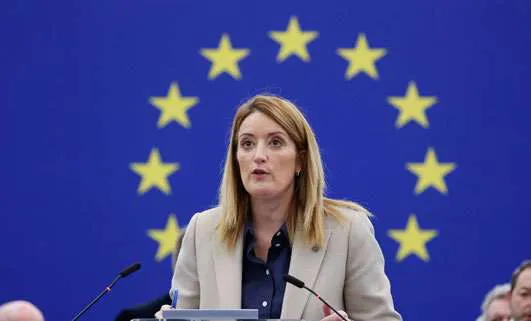
Qatargate therefore questions the soul of Parliament, always at the forefront and more progressive than the other institutions on the issues listed above but also on topics such as transparency, democratic representation and political integration of the EU. For these reasons, the date of December 9th changes everything and an important effort is what is expected. The speech at the opening of the plenary on 12 December given by the President of the European Parliament Roberta Metsola proved to be effective. Metsola showed anger and determination and capacity for action, at least in relation to the rather limited powers entrusted to her role.
More in Markets
 Markets
Salt instead of scarcity: how CATL’s sodium battery launch redraws the map of the energy transition
 Markets
Quick hits: TikTok saved, sort of, and SpaceX swallows xAI in the largest merger in history
 Markets
Big Tech’s power shift: who owns AI, who owns the future
 Markets
The $3 trillion IPO summer: SpaceX, OpenAI and Anthropic go public