 The Handelot Times
It is forbidden to talk about war in Russia
The new law in force in Moscow punishes journalists and bloggers who write the words ‘war’ and ‘invasion’ with up to 15 years in prison.
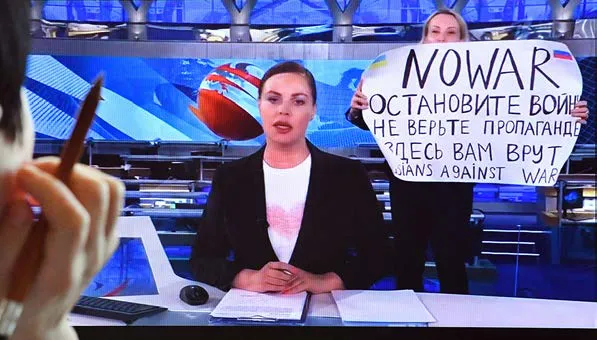
The new law in force in Moscow punishes journalists and bloggers who write the words ‘war’ and ‘invasion’ with up to 15 years in prison. Independent TV stations have also been silenced while many media opposed to the regime are forced, in order to remain open, to cancel any reference to Putin’s invasion of Ukraine.
On the other hand, ever since it invaded Ukraine, Moscow has imposed a ferocious squeeze on freedom of the press. All non-aligned information on the Kremlin’s positions was censored and laws introduced ‘to limit any dissonant expression and silence independent media, journalists and activists’, as reported by Amnesty International.
Since March 2022, in fact, in Russia the absolute ban on pronouncing the words ‘war’ and ‘invasion’ on social networks, newspapers and TV has come into force, forcing anyone who does not want to end up in the jail to use the expression ‘special military operation’. The spread of news that the Kremlin considers ‘fake news’ or ‘disinformation’, appeals for sanctions against Russia and any reference to the Russian army ‘in derogatory terms’ are punished with up to 15 years in prison. At risk not only the traditional media, but also individual citizens who use blogs and social networks to spread the Ukrainian drama. In summary, for the Putin administration whoever writes or speaks critically about war - or who calls it ‘war’ / ‘invasion’ - strikes ‘the national interest’ and is considered a ‘traitor’.
As a result of the new ‘war rules’, the majority of
Western correspondents in Moscow - from Italian RAI to Spanish state TV RTVE, from CNN to CBS, from BBC to ABC and Bloomberg - suspended their activities in Russia. ‘The criminalization of independent journalism leaves us no choice but to suspend the work of all BBC journalists and their support staff in Russia,’ said BBC Director-General Tim Davie. If that were not enough, most of the online news sites not aligned with Russian propaganda have been blacked out, from the BBC itself to the German Deutsche Welle, from the independent Latvian Russian-language website Meduza, very popular in Russia, to Radio Svoboda, from TV Rain, to Voice of America and Radio Free Europe / Radio Liberty.
More in Markets
 Markets
Salt instead of scarcity: how CATL’s sodium battery launch redraws the map of the energy transition
 Markets
Quick hits: TikTok saved, sort of, and SpaceX swallows xAI in the largest merger in history
 Markets
Big Tech’s power shift: who owns AI, who owns the future
 Markets
The $3 trillion IPO summer: SpaceX, OpenAI and Anthropic go public