 The Handelot Times
Kazi Najib Ashraf: Iraq: the new trading sponge of the middle east
It was 2012 when I saw the Royal Court of Trading in Dubai’s Nasser Square: a medium sized office in “Crystal Palace Building” housed one of the most powerful trading houses for mobile business.
It was 2012 when I saw the Royal Court of Trading in Dubai’s Nasser Square: a medium sized office in “Crystal Palace Building” housed one of the most powerful trading houses for mobile business. Millions of dollars flew in and out of the ERP systems sales and visitors thronged the galleries of the office vying to meet the headman running the show. Still, that was not about that behemoth of a Trading Giant, but the markets that it used to serve in the Middle East Region. It had been Saudi Arabia and Iran that would take the majority of the mobile trading stock and then there were the others coming and going on and off, according to seasonality. Saudi traders were treated as celebrities, while stories of their conquests became a part of the legend with individuals importing millions of handsets every year without a blink of an eye.
Fast forward to now, Saudi Arabia is exporting excess stock to the UAE, as borders now impose restrictions on the grey market and Iran has fallen pray to the whatever it is… so let us not get into it. Saudi Arabian choke has already happened a few years ago, so what exactly are the Dubai traders doing now? Trading is still hot and new markets have been discovered; still, there is one market that has shown resilience and signs of promising returns. With a population of 41 million individuals and borders touching Saudi Arabia, Turkey, Syria Jordan and Iran, the market of Iraq is now at the forefront of mobile trading in the Middle East. The eastern part of the country spills excess stock through its porous borders to its neighbours, while the political stability has strengthened consumer confidence hence demanding high quality products.
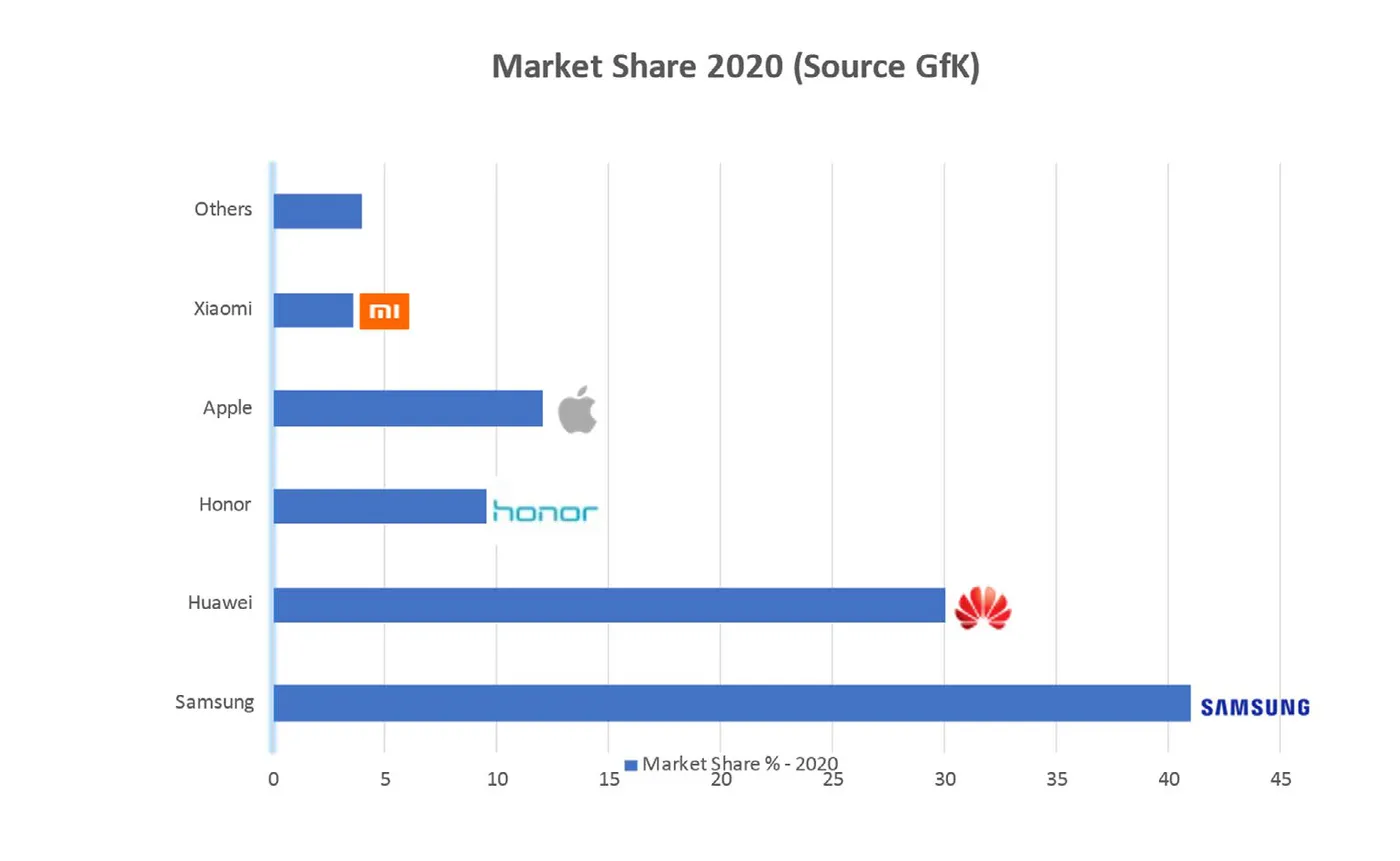
The second instance that had turned the alarm bells at the mid of 2019 had been the aggressive stance of US government against Huawei and its subsidiary, Honor. The twin brands had identified Iraq as one of their key markets and had installed a very attractive regime to ensure a tough stance against the incumbent Samsung. In store promoters, ATL, BTL and TTL advertising campaigns ran amok, and the Iraqi population simply fell in love with the brands. Almost all grey market had been curbed, especially from the UAE, and any parallel stock if identified meant a serious throw back at them from the Principal company. For example, if by chance one fine day it all disappeared, there weren’t any Huawei or Honor mobile phones available on the shelves and the vacuum became terribly visible.
On the other hand, Samsung had been playing the monkey in the circus at this stage, by butting its distributors against one another through laughingly funny programs; all this to counter the onslaught of the twin brands, already and equally taken by surprise by the new move.
More in Markets
 Markets
Salt instead of scarcity: how CATL’s sodium battery launch redraws the map of the energy transition
 Markets
Quick hits: TikTok saved, sort of, and SpaceX swallows xAI in the largest merger in history
 Markets
Big Tech’s power shift: who owns AI, who owns the future
 Markets
The $3 trillion IPO summer: SpaceX, OpenAI and Anthropic go public