 The Handelot Times
RIP CeBIT
What caused the death of the world’s largest consumer electronics trade fair?
What caused the death of the world’s largest consumer electronics trade fair?
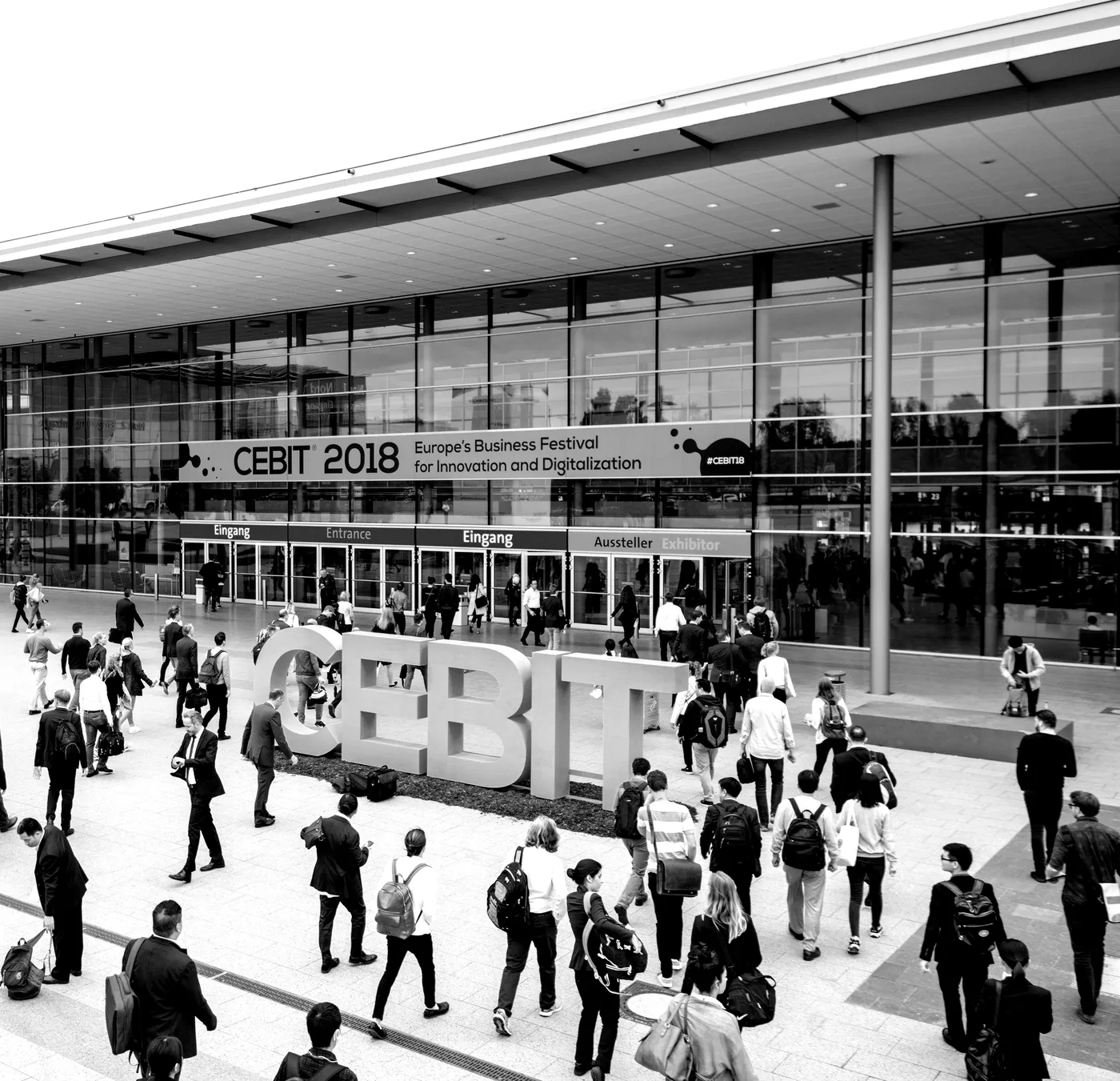
In November, it was announced that the long-standing CeBIT convention (the name coming from a German acronym for Center for Office Automation, Information Technology and Telecommunication) was shutting down shop for good. Having been held in the city of Hannover for over three decades, parent company Deutsche Messe AG announced the cancellation in response to reduced space bookings ahead of its 2019 edition, tentatively schedule for June as usual.
Many pundits in the tech world had been calling for the death of CeBIT for years. At the outset, information technology was but a part of the original Hannover Trade Fair, which began in 1970. In 1986, due to the increasing demand for home computers and personal electronic devices, the tech sector was spun off into its own event. CeBIT drew increasing numbers peaking with the dot-com bubble when it drew 850,000. After the crash, the crowds dwindled every year thereafter, only drawing 120,000 attendees in its final edition. In announcing the cancellation, Deutsche Messe AG noted that the mothership CeBIT show will be survived by its own spin-off trade shows in Australia, Thailand, and Russia.
Could the demise of CeBIT have been prevented? Perhaps the trade fair could have had more funding and resources poured into it, being kept alive like a zombie for the sake of pride. In reality, CeBIT lived a long, rich life before having the plug pulled on it long after it was viable. It would be nice to say that the event went peacefully while still maintaining some dignity, but it’s hard to say it even had that. The 2008 edition of the show was subject to police raids for alleged patent infringements by some of the exhibiting companies. Why did CeBIT die?
More in Markets
 Markets
Salt instead of scarcity: how CATL’s sodium battery launch redraws the map of the energy transition
 Markets
Quick hits: TikTok saved, sort of, and SpaceX swallows xAI in the largest merger in history
 Markets
Big Tech’s power shift: who owns AI, who owns the future
 Markets
The $3 trillion IPO summer: SpaceX, OpenAI and Anthropic go public