 The Handelot Times
The business of war: the latest military acquisition trends in the Middle East
The International Defence Exhibition and Conference (IDEX) stands as one of the world’s largest arms exhibitions every two years in Abu Dhabi, United Arab Emirates (UAE).
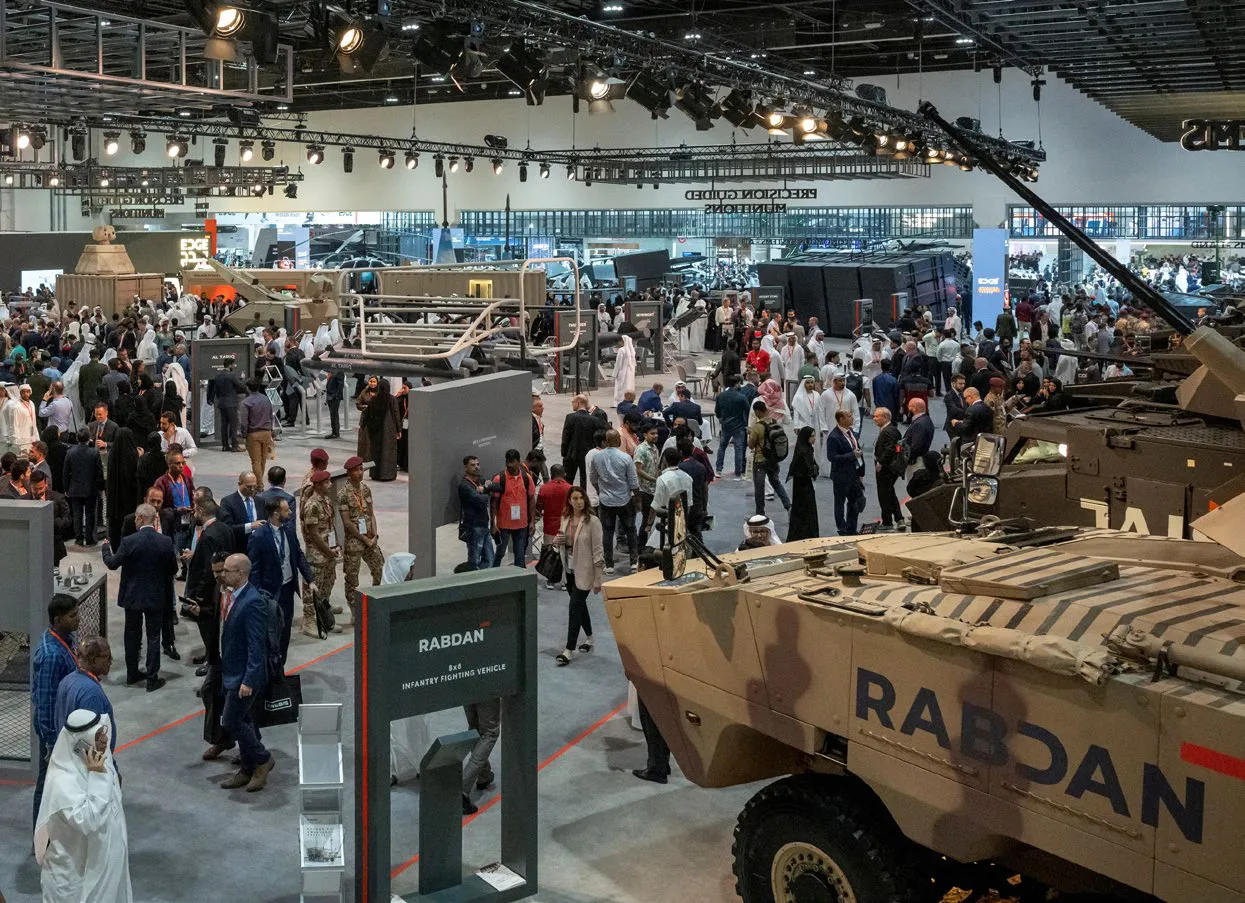
The International Defence Exhibition and Conference (IDEX) stands as one of the world’s largest arms exhibitions every two years in Abu Dhabi, United Arab Emirates (UAE). This event spans five days and draws defense companies from across the globe to showcase cutting-edge land, sea, and air weaponry and military technology systems. Beyond its role as a showcase, IDEX provides a unique platform for forging and fortifying relationships with government bodies, businesses, and armed forces in the Middle East and North Africa region.
Hosting such an event carries significant strategic and economic weight for the UAE. IDEX acts as a stage for the country to display its homegrown military capabilities and to attract investments and partnerships from major global players in the defense industry. Furthermore, the exhibition reinforces the UAE’s standing as a regional leader in defense and security, underscoring the nation’s commitment to maintaining robust defense capabilities and forming alliances with influential countries. Notably, it draws high-profile participants, including government officials, military leaders, and representatives from the defense industry. This gathering raises the UAE’s profile on the global stage and provides an avenue for the nation to engage with other countries and construct partnerships to address shared threats and challenges.
In recent times, IDEX has garnered particular attention due to the ongoing conflict in Ukraine, which has driven a substantial increase in global defense spending. Regrettably, the reality is that war can stimulate business. Since Russia’s invasion of Ukraine in February 2022, the stock prices of the top five U.S. weapons manufacturers, including Lockheed Martin, Raytheon, Boeing, Northrop Grumman, and General Dynamics, have collectively surged by nearly 13%. Even prior to the current conflict in Europe, global defense spending had been on a remarkable upward trajectory.
Prior to Russia’s invasion of Ukraine in February 2022, NATO members typically aimed to allocate 2% of their gross domestic product (GDP) to military spending. Today, European partners, such as France, Germany, and the United Kingdom, are considering substantial increases in their military budgets, with Poland aiming to double its spending to 4%—the highest among all NATO members, surpassing the United States, which allocates 3% of its GDP to defense. As the United States reassesses its foreign policy priorities, there is a gradual shift in focus from the Middle East to emphasize initiatives in the Asia-Pacific region while concurrently countering Russian actions in Ukraine.
More in Markets
 Markets
Salt instead of scarcity: how CATL’s sodium battery launch redraws the map of the energy transition
 Markets
Quick hits: TikTok saved, sort of, and SpaceX swallows xAI in the largest merger in history
 Markets
Big Tech’s power shift: who owns AI, who owns the future
 Markets
The $3 trillion IPO summer: SpaceX, OpenAI and Anthropic go public