 The Handelot Times
The wars unleashed by tyrants where there is no freedom of the press
Information, one of the main counterpowers, helps to keep the democratic air of countries healthy, when it is eliminated or compressed it risks developing the mold of violence.
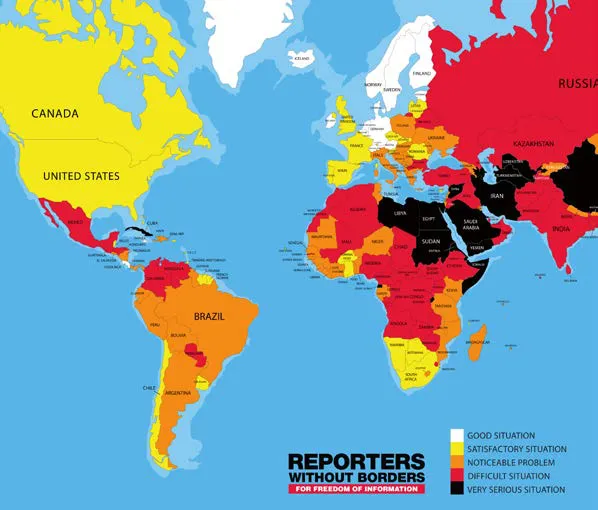
Information, one of the main counterpowers, helps to keep the democratic air of countries healthy, when it is eliminated or compressed it risks developing the mold of violence.
Still, the Nobel Peace Prize had been awarded only once to a journalist: in 1935 to Carl von Ossietzky, at the time already detained in a concentration camp, because he was a fierce opponent since the origins of Nazism. He will not be able to collect the award and will die in prison three years later. Today, when the war has returned to the heart of Europe, this consideration makes a certain impression. The Russian regime, it is known, has distinguished itself for the violent repression of the press and on the other hand the circumstance is not surprising: all autocratic countries are naturally hostile to any system of counterpowers. And therefore the opposition parties, the administrative control bodies, the independent judiciary disappear or are silenced. With them also the most fragmented, the most widespread and therefore also the least controllable of counterpowers: the free press.
This is replaced by the information apparatus of the regime, where incredible propaganda statements flourish in profusion, on the basis of which to justify, in the eyes of one’s own people, the worst atrocities. It happens in times of peace, it happens, even more so, when violence takes the place of dialogue and diplomacy. It is the breeding ground where power, left free to expand without limits, degenerates into its most hateful and hateful forms. more dangerous, as evidenced by the tragic news of these days.
And so one morning the worst news arrives: a dictator bends news and history to his personal design of power, up to the terrible choice of starting an invasion, baptizing it with ferocious euphemism ‘special military operation’.
More in Markets
 Markets
Salt instead of scarcity: how CATL’s sodium battery launch redraws the map of the energy transition
 Markets
Quick hits: TikTok saved, sort of, and SpaceX swallows xAI in the largest merger in history
 Markets
Big Tech’s power shift: who owns AI, who owns the future
 Markets
The $3 trillion IPO summer: SpaceX, OpenAI and Anthropic go public