 The Handelot Times
VR blunders
VR technology is working hard to have its moment in the sun.
VR technology is working hard to have its moment in the sun. With headsets coming down in price for home consumption and the rise of VR as a group activity for professional and casual settings alike, it’s quietly becoming a mainstream fixture of the monoculture. It’s hard to ignore that there have been mis-steps; even as the Oculus Rift threatens to become a fixture of entertainment centers worldwide, The Economist cites its not-quite-wireless nature, lower-than-expected image resolution and VR startups’ eagerness to cut costs as a signal that the technology is in its death throes. Just as it was unfair to criticize Ronaldinho for not being a world-renowned football star at age 10, it’s unfair to criticize this budding technology, which has long been a tech freak’s dream, for not reaching maturity right here and right now. Even so, it’s irresistibly fun to look back at past tech novelties that we thought would be The Future and shake our heads -- at both the manufacturers and ourselves.
Nintendo’s virtual boy
Throughout the 1980s and 1990s Nintendo was on a real hot streak, with the Nintendo Entertainment System (and its Super sequel) selling like hotcakes and the Game Boy allowing gamers to game on anywhere at anytime. The Virtual Boy was one of Nintendo’s only big failures; it was portable but impractical to use on the go, and the company didn’t support the release of the device with an extensive library of games. Most of all -- and this is a shortcoming that befell most early virtual reality devices -- it wasn’t actually an example of immersive virtual reality, using technology that amounted to little more than high-tech 3D glasses.
The sensorama
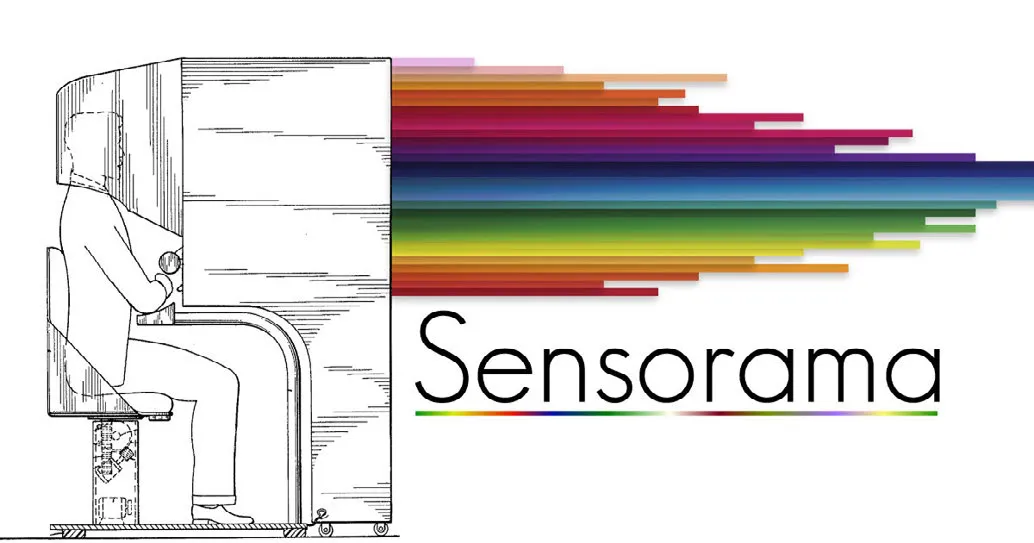
Speaking of virtual reality technologies not living up to their names for not qualifying as immersive, the Sensorama hardly qualifies as technology. Unveiled as a prototype in 1962, Morton Heilig’s mechanically functioning (!) novelty meant to place a box on a viewer’s head which showed a stereoscopic movie, releasing scents and blasts of wind as the narrative required. Heilig’s vision of futuristic cinema did decidedly not start here, although VR developers’ obsession with large headsets certainly did.
Nintendo’s power glove
Credit where credit is due for thinking outside the box; before Nintendo fell in lockstep with the headset trend, they attempted a glove that relied on motion-tracking technology to control gameplay (not too much unlike their earlier NES accessory, the Zapper). It looked cool to kids everywhere, especially after debuting in the hit movie The Wizard. However, it was less effective than the standard NES controller for the two games it supported. Despite selling nearly one million units, the Power Glove phenomenon was over as quickly as it began.
More in Markets
 Markets
Salt instead of scarcity: how CATL’s sodium battery launch redraws the map of the energy transition
 Markets
Quick hits: TikTok saved, sort of, and SpaceX swallows xAI in the largest merger in history
 Markets
Big Tech’s power shift: who owns AI, who owns the future
 Markets
The $3 trillion IPO summer: SpaceX, OpenAI and Anthropic go public