 The Handelot Times
What changed in the 2010s: technology & religion
The intersection of technology, religion, and spirituality has been one that’s confusing to navigate.
The intersection of technology, religion, and spirituality has been one that’s confusing to navigate. As technology takes up more and more of our lives, it promises to become a part of our humanity through body modifications. Conversations about the ethics of this have already begun to take place, especially in religious communities over whether transhumanism flies in the face of the will of God. However, The Handelot Times is not the venue for such a weighty topic.
In recounting some of the more unfortunate trends of the 2010s, we arrive at one that could go either way: a tentative embrace of tech by religion. Even believers use the internet, and it’s incumbent upon churches and religious leaders to be wherever their followers are. Here are some current gadgets and software that attempt to bring belief into the future.
The “Click-to-Pray” rosary
Officially sanctioned by The Vatican, the world’s first “smart rosary” bracelet is a novel attempt at reaching out to young (and would-be) Catholics. Made of hematite, the bracelet is worn around the wrist and activated by making the Sign of the Cross, and takes users through a selection of rosaries, or series of prayers, and even includes personalized religious content. The fact that rosaries are not meant to be worn might rub some Catholic believers the wrong way.
Select your donation method
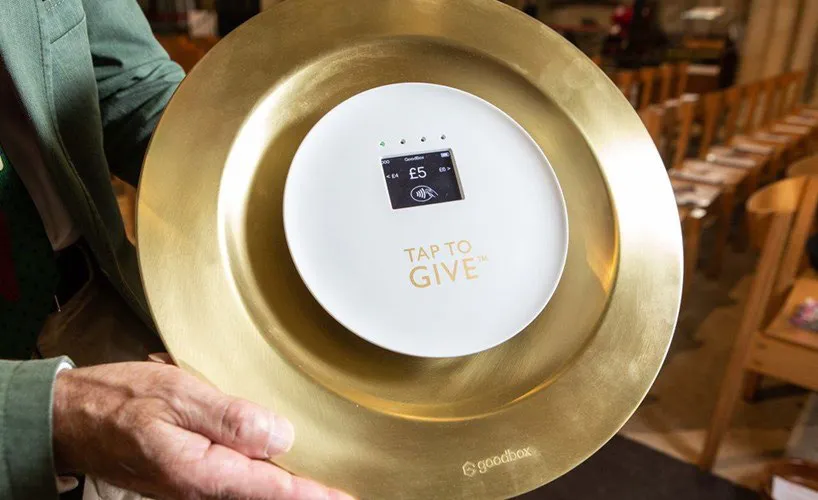
For those that grew up some manner of Christian, the collection plate asking for donations to the needy made regular appearances at worship service, sometimes multiple times per mass. Now, not having loose change is no excuse for being stingy: The Guardian reports that Catholic and Protestant churches alike have begun to use contactless card readers to collect alms. Unfortunately, this means there’s no more anonymously slipping a couple of low-value coins into the basket - you will be judged. Keeping Kosher & Halal on Holiday Sometimes software developers just know how to cater to the faithful. Apps such as ScanHalal and OU Kosher help Muslim and Jewish observers, respectively, find restaurants where they can get a meal in keeping with their religious requirements, and even verify such requirements for store-bought products.
More in Markets
 Markets
Salt instead of scarcity: how CATL’s sodium battery launch redraws the map of the energy transition
 Markets
Quick hits: TikTok saved, sort of, and SpaceX swallows xAI in the largest merger in history
 Markets
Big Tech’s power shift: who owns AI, who owns the future
 Markets
The $3 trillion IPO summer: SpaceX, OpenAI and Anthropic go public